Near Tha Tien Market, the salty funk of dried seafood sneaks out of old shops in Tha Rong Mo Alley. Outside the wholesalers, cardboard boxes teeter in uneven towers, exhaling paper, dust and Bangkok humidity. A century ago, Tha Tien was one of central Thailand’s great trading hubs, with boats unloading palm sugar, seafood and agricultural goods along the Chao Phraya. Much of that traffic is gone, but smells are stubborn things. A few have refused to leave.
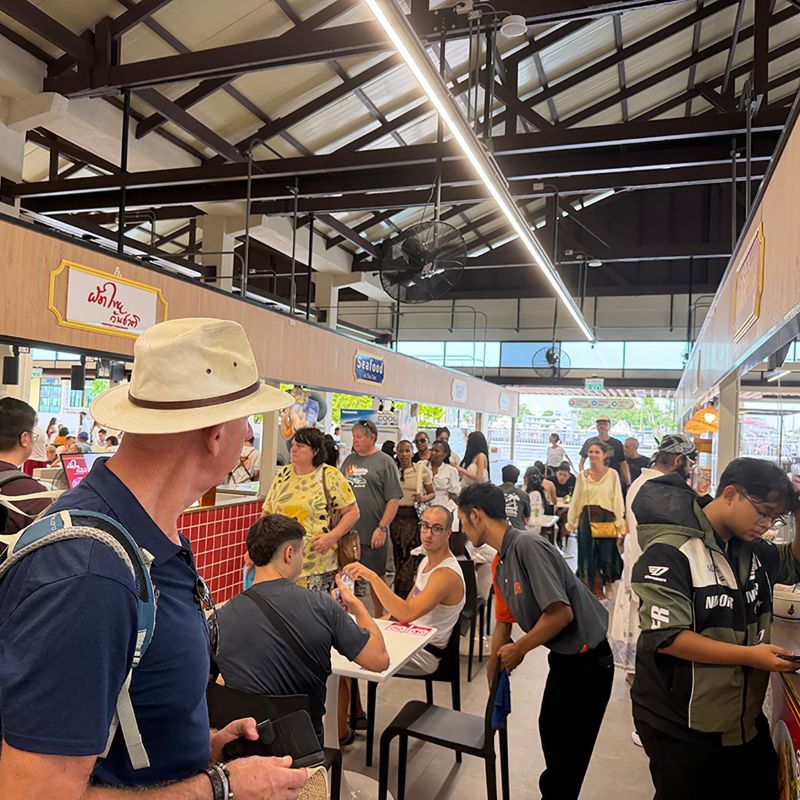
The fish, however, has learned some manners. Before Tha Tien Market was renovated in 2023, seafood sat openly on display and its smell wandered wherever it pleased. Now much is vacuum-packed, fans shoo the air along, and fewer seafood sellers remain. One longtime merchant chose not to return, telling me the market had become “a place for eating rather than buying.” You can almost smell the change: less fish, more lunch.
In Soi Pratunokyoong, I went sniffing for a smell that had disappeared. From the late nineteen-forties, palm sugar was reheated here for Bangkok’s confectionery makers, sending caramel sweetness curling down the alley. “When the sugar was boiling,” a former merchant recalled, “the whole alley smelled sweet and rich.” Today, my nose finds nothing. The workshops are gone; the pots have stopped bubbling. Buildings can be restored and photographs archived. Smells are less cooperative. One day they slip away and survive only in somebody else’s nose.
Toward Wat Pho, camphor and menthol barge in first; eucalyptus and lemongrass trail behind, tangling with coffee and restaurant kitchens. Cafés, boutique hotels and visitors have added their own layer to the air. Within a few streets, I found several Tha Tiens: one refusing to leave, one living in memory, and another drifting in.
Cities are good at showing off what is new. The nose may be better at catching what they haven’t quite managed to erase.