Cinnamon clocks in before the cafés do. Early in the morning, the old spice shops are already awake. Sacks of cinnamon, star anise, cardamom and Chinese herbs sit open to the street, filling the air with something warm, woody and slightly medicinal. Nearby, Uri Braised Goose has its broth simmering hours before opening. Then comes smoke from the food carts: chicken sizzling over charcoal, roasted eggs, steaming fish balls. Before Song Wat becomes somewhere to visit, people are busy getting on with their day.
It has been that way for a while. Built during the reign of King Chulalongkorn, Song Wat grew into a riverfront artery of warehouses, spice merchants and cargo piers. Then trucks replaced boats, businesses moved elsewhere, and in 2007 the last cargo boat pulled away. Yet arrive early enough and the old trading district still seems to report for duty.
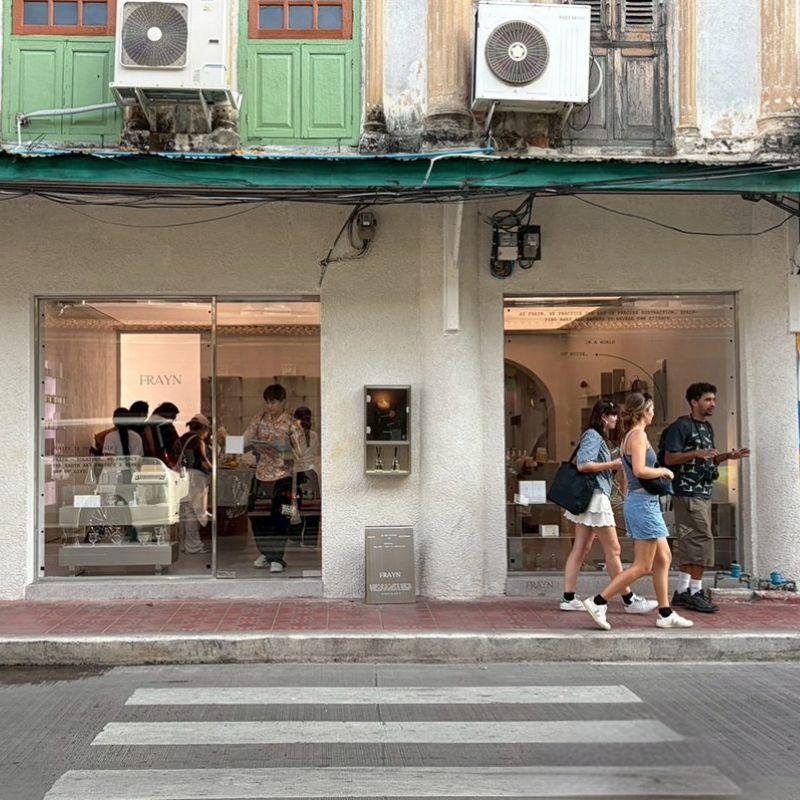
By afternoon, another Song Wat takes the shift. The wholesalers quiet down as cafés, galleries and restaurants fill up. I can barely smell the coffee. The newer businesses tend to keep their aromas tucked neatly behind glass and air-conditioning. The street smells instead of its visitors: perfume, sunscreen, sweat, hot pavement and the exhaust of motorcycles and tuk-tuks.
By evening, the visitors thin out and the less photogenic work begins. Pavements are hosed down. Rubbish bags gather outside restaurants. Detergent mingles with leftover food, drains and damp concrete. None of this is likely to make a tourism brochure, but someone has to clean up the version of Song Wat everyone came to see.
Stay long enough and the neighbourhood becomes a clock you can smell: cinnamon, broth and smoke in the morning; perfume, sunscreen and exhaust in the afternoon; detergent, leftovers and wet pavement at night.
By tomorrow morning, cinnamon will be back at work.